


How Do Fire Damage Restoration Professionals Remove Smoke Odor in Denver Homes?
After a fire, the visible damage is only part of the story. What lingers—and often causes the most frustration for Denver homeowners—is the smell of smoke. That odor doesn’t just sit in the air. It penetrates deep into your home’s structure, your belongings, and even hidden areas you can’t see.
At Abbotts Cleanup & Restoration, we specialize in complete smoke odor removal, using a full-scope approach that addresses structure, contents, and air quality—so the smell doesn’t come back weeks later.
Why Smoke Odor Lingers (Especially in Denver Homes)
Smoke particles are microscopic and behave like a gas. During a fire, heat and pressure force them into every available opening in your home.
In the Denver market, this problem can be even worse due to:
- Dry air that allows particles to travel further
- Forced-air HVAC systems that circulate contaminants
- Attic-heavy home designs that trap rising smoke
Smoke spreads into:
- Wall cavities
- Attics and insulation
- Crawl spaces and soffits
- Furniture and personal belongings
If not properly treated, these particles continue releasing odor long after the fire is out.
Porous vs. Non-Porous Materials: What Holds the Smell?
Porous Materials = Deep Odor Absorption
Porous materials contain tiny openings that trap smoke particles deep inside.
Common examples:
- Mattresses
- Couches and cushions
- Curtains and drapes
- Carpet and padding
- Drywall and insulation
These materials act like sponges, holding onto the smoke odor beneath the surface. Even if they look clean, they can continue releasing odor for months.
In many cases, heavily affected porous materials must be professionally treated or removed entirely to fully eliminate the smell.
Non-Porous Materials = Surface Contamination
Non-porous materials don’t absorb smoke the same way. Instead, soot sits on the surface.
Examples include:
- Tile and stone
- Glass
- Metal
- Sealed wood
These materials can usually be restored with professional cleaning and deodorization, provided the damage isn’t too severe.

The Hidden Problem: Smoke in Attics, Walls, and Confined Spaces
One of the biggest reasons smoke odor returns is that it’s hiding where you can’t see it.
During a fire, heat creates pressure that forces smoke into:
- Interior wall cavities through outlets and seams
- Attics through ceiling penetrations
- Tight structural voids and dead air pockets
These areas become trapped reservoirs of smoke particles.
Over time, they slowly release odor back into your home—undoing any surface cleaning that was done.
How We Fix It: Opening, Cleaning, and Treating Hidden Areas
At Abbotts Cleanup and Restoration, we don’t guess—we track smoke movement and treat it at the source.
When necessary, we:
- Open up drywall and ceiling cavities
- Remove contaminated insulation
- Access soffits and confined spaces
- HEPA vacuum framing and structural components
- Apply targeted odor-neutralizing treatments
This step is critical. If these areas aren’t addressed, the job isn’t complete.

HEPA Vacuuming & Structural Decontamination
Once access is created, we use HEPA-filtered vacuum systems designed to capture microscopic smoke particles.
We clean:
- Wood framing and studs
- Attic decking and joists
- Interior wall surfaces
- Hard-to-reach confined spaces
This removes the actual contamination—not just the smell.
Full Contents Cleaning: Restoring What Matters Most
Complete Pack-Out & Restoration Process
Smoke doesn’t stop at your structure—it affects everything inside your home.
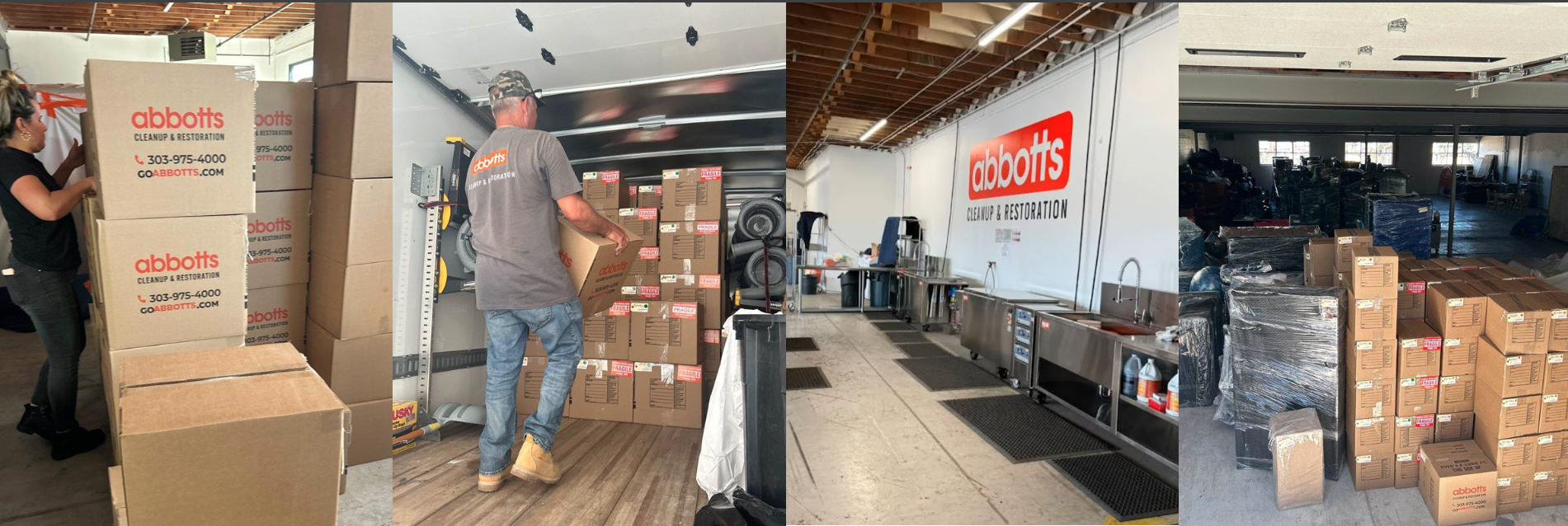
That’s why we offer full contents cleaning services, handling your belongings with care from start to finish:
- Detailed Inventorying – Every item is documented and tracked
- Careful Pack-Out – Safe removal from the property
- Professional Cleaning – Specialized smoke and soot removal techniques
- Advanced Deodorization – Eliminating odor at the molecular level
- Secure Storage – Clean, climate-controlled storage until your home is restored
From clothing and electronics to furniture and sentimental items—we help restore what can be saved.
Advanced Odor Removal Technology
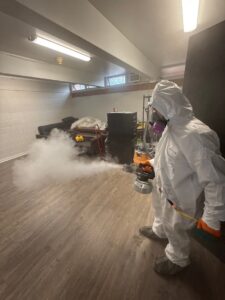
To fully eliminate smoke odor, we use industry-grade equipment such as:
- Thermal fogging to penetrate materials
- Ozone or hydroxyl treatments to neutralize odor molecules
- Air scrubbers to clean airborne contaminants
This ensures your home is not just clean, but safe and breathable.
Why Experience Matters in Fire Damage Restoration
Not all restoration companies approach smoke damage the same way. Many stop at surface cleaning—leaving hidden contamination behind.
Abbotts Cleanup and Restoration stands apart because:
 1,000+ Five-Star Reviews
 A+ Rating with the Better Business Bureau
 Specialized expertise in smoke odor removal
 Deep experience serving Denver and the surrounding areas
We understand how smoke behaves—and how to eliminate it completely.
Why DIY or Partial Cleaning Fails
Most store-bought solutions only mask odor temporarily. They don’t address:
- Deep absorption in porous materials
- Hidden smoke in structural cavities
- Contamination inside the contents and HVAC systems
Without full remediation, the odor will come back—sometimes stronger.
Call Abbotts Cleanup & Restoration Today
If your Denver home still smells like smoke after a fire, the issue is likely deeper than what you can see.
Call Abbotts Cleanup & Restoration at 1-303-975-4000 for expert fire damage restoration and smoke odor removal in Denver, CO.
Final Thoughts
True smoke odor removal requires a complete, structural approach:
- Identifying all contamination sources
- Addressing porous vs. non-porous materials
- Opening and cleaning hidden spaces
- Restoring contents and air quality
When done correctly, the odor is gone for good.
And that’s exactly what we deliver.